Your toddler is having their third meltdown of the day, and you’re wondering if this is just “normal toddler behaviour” or if there’s something more you can do. The answer might be sitting in your kitchen cupboard.
The emerging science around the gut-brain connection reveals something fascinating: our digestive system and brain are in constant communication, and this relationship is particularly crucial during the toddler years when both systems are rapidly developing.
Understanding how specific foods can support your toddler’s mood isn’t about perfect nutrition, it’s about making informed choices that could genuinely make your days together more joyful and harmonious.
Your toddler’s second brain
Scientists often refer to our gut as the “second brain,” and for good reason. Dr Sarah Johnson, a paediatric nutritionist at Great Ormond Street Hospital, explains: “The gut produces around 90% of our body’s serotonin – the ‘happy hormone’ that regulates mood, sleep, and appetite. In toddlers, whose gut microbiome is still developing, the foods they eat directly influence their emotional state.”
The gut-brain connection works through several pathways. The vagus nerve acts like a motorway between your toddler’s digestive system and brain, constantly sending signals about their internal state.
When their gut is happy and balanced, those signals promote calm, focused behaviour. When it’s disrupted by processed foods, sugar spikes, or food sensitivities, the messages can contribute to irritability, anxiety, and those infamous toddler tantrums.
This connection explains why you might notice your little one becomes particularly challenging when they’re hungry, or why certain foods seem to trigger difficult behaviour.
A study published in the Journal of Child Psychology found that toddlers who consumed more processed foods showed increased hyperactivity and emotional volatility compared to those eating whole foods.
Mood-boosting foods your toddler will actually eat
Many foods that support the gut-brain connection are naturally appealing to young palates. Here are the key players to include in your toddler’s diet…
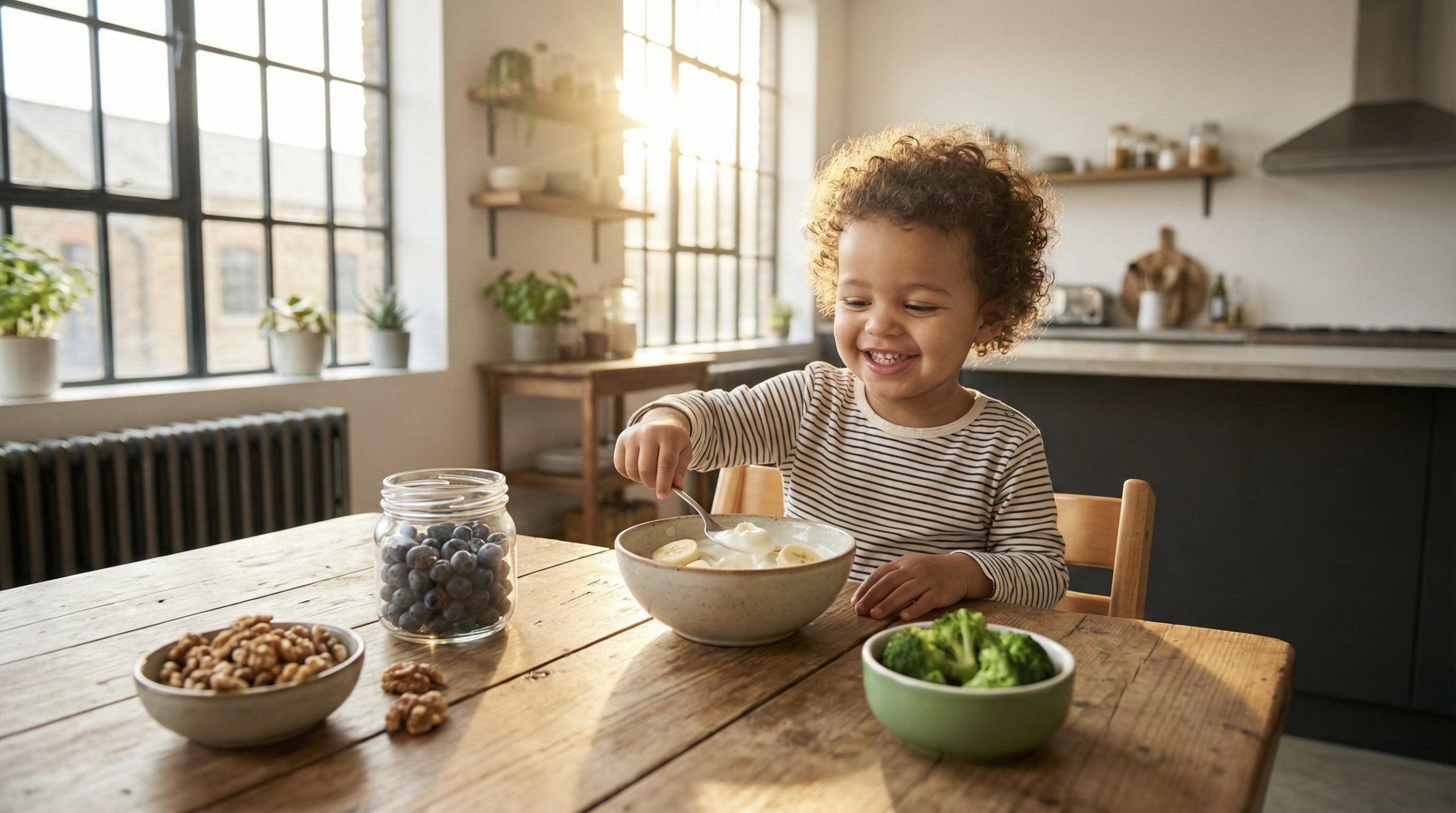
Probiotic powerhouses: Natural yoghurt, kefir, and mild fermented foods like sauerkraut introduce beneficial bacteria that support gut health. Try mixing yoghurt with mashed banana and a drizzle of honey (for children over 12 months) – the combination provides both probiotics and prebiotic fibres that feed good bacteria.
Omega-3 rich options: Salmon, sardines, walnuts, and chia seeds support brain development and reduce inflammation. If your toddler turns their nose up at fish, try salmon fish cakes or mixing ground walnuts into pancake batter.
Fibre-rich fruits and vegetables: Berries, apples, sweet potatoes, and broccoli provide the prebiotic fibres that beneficial gut bacteria thrive on. The key is variety – aim for different colours throughout the week rather than perfection at every meal.
Research from King’s College London found that children who ate fermented foods regularly showed improved stress responses and better sleep patterns within just four weeks. The study’s lead researcher noted that even small, consistent changes in diet produced measurable improvements in mood regulation.
Creating changes that work for busy families
Understanding the gut-brain connection is one thing, implementing changes with a strong-willed toddler is quite another. The secret lies in gradual shifts rather than dramatic overhauls.
Start with “stealth nutrition” – adding gut-friendly ingredients to foods your toddler already enjoys. Blend spinach into fruit smoothies, mix chia seeds into yoghurt, or serve vegetables with familiar dips like hummus.
Dr Johnson suggests: “Focus on addition rather than restriction. When you crowd out processed foods with nutrient-dense alternatives, you naturally improve the gut-brain connection without battles at mealtimes.”
Timing matters too. Serving protein-rich foods earlier in the day helps stabilise blood sugar levels, preventing the afternoon crashes that often trigger difficult behaviour. A breakfast of scrambled eggs with avocado provides lasting energy that supports emotional regulation throughout the morning.
Remember that every child’s gut microbiome is unique. Keep a simple food and mood diary for a week – you might spot patterns that help you identify which foods support your toddler’s best behaviour and which ones contribute to challenging moments.
Building happier days, one meal at a time
The gut-brain connection offers hope for parents navigating the ups and downs of toddler behaviour. While nutrition isn’t a magic solution for every challenging moment, supporting your little one’s gut health through thoughtful food choices can genuinely contribute to more regulated emotions and easier days together.
Start small – maybe swapping one processed snack for a gut-friendly alternative this week, or introducing a new probiotic food alongside a familiar favourite. These incremental changes respect both your toddler’s developing palate and your family’s realistic needs.
What matters most isn’t achieving nutritional perfection, but understanding that the foods you offer your toddler are quietly supporting their emotional development alongside their physical growth.